
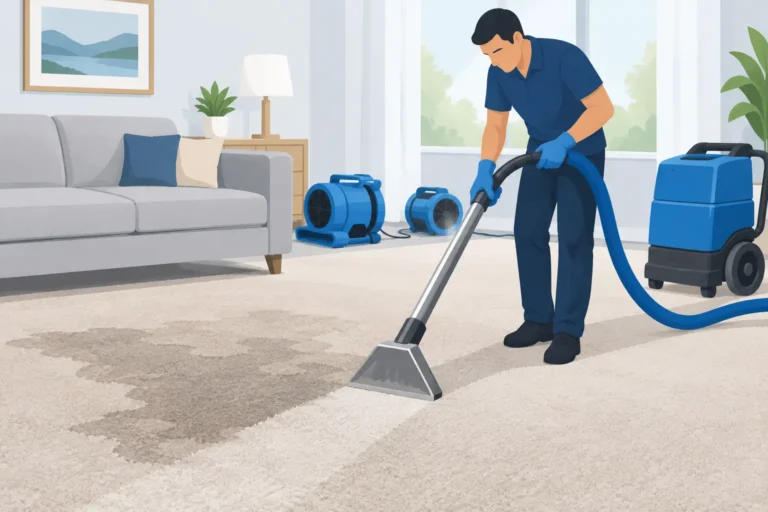
A burst washing-machine hose, overflowing bath or rain entering under a door can turn a dry carpet into a problem within minutes. To restore carpets after water damage, the first few hours matter most. Fast action can reduce staining, odour and mould risk, while waiting for a carpet to dry on its own can leave moisture trapped underneath where it cannot be seen.
For homes, rentals and managed properties across Perth’s northern coastal communities, the right response depends on where the water came from, how long it has been present and whether it has reached the underlay or subfloor. Some lightly affected carpets can be saved. Others need a more cautious approach.
What to do first after carpet gets wet
Start by stopping the source of water if it is safe to do so. Turn off the tap, isolate the appliance or move belongings away from the affected area. If water is close to electrical outlets, power points or appliances, avoid the area and arrange appropriate help before touching anything.
Remove furniture, rugs, boxes and other items from the wet carpet where possible. Timber furniture can leave dye marks, rust stains or impressions if it remains in place. Put protective pads or foil beneath furniture legs only if the carpet is not heavily saturated and the item cannot be moved straight away.
Use towels to blot small patches and remove surface water. For a larger area, a wet vacuum can be useful, but it is only the beginning. The water held in the backing, underlay and edges of the carpet is often the part that causes the longest-lasting issues.
Find out what type of water is involved
Clean water from a fresh tap leak or appliance supply line is generally the best-case scenario, provided it is dealt with promptly. Even then, it can become unsanitary if left standing.
Water from a washing machine, dishwasher, overflowing sink or stormwater can carry dirt and contaminants. Sewage, toilet overflows or water affected by waste should never be treated as a standard carpet-cleaning job. Keep people and pets away, wear appropriate protection and seek specialist advice, as contaminated materials may need to be removed rather than cleaned.
Can you restore carpets after water damage?
The honest answer is that it depends. A carpet has a better chance of recovery when the water is clean, the affected area is dealt with quickly and the moisture has not sat long enough to encourage mould growth. Modern synthetic carpets often tolerate water better than natural fibres, but the underlay and timber or concrete beneath still need to be properly dried.
Carpet condition also matters. If the carpet was already worn, heavily soiled, delaminating or smelling musty before the incident, drying alone may not deliver a satisfactory result. Wool carpet deserves extra care because excessive moisture and unsuitable cleaning methods can cause shrinkage, browning or texture changes.
Lift a corner only if you can do so without damaging the carpet or its fixing. Damp underlay, a wet tack strip, dark staining around the edges or a strong musty smell are signs that surface drying will not be enough. Water can travel well beyond the visible wet patch, particularly along skirting boards and underneath heavy furniture.
Drying wet carpet properly
Good drying is about removing moisture, not simply making the top feel dry. Open windows and doors if the outdoor air is dry, use fans to move air across the room and run air conditioning or a dehumidifier where available. Avoid relying on a heater alone. Warmth without enough airflow can leave humid air sitting in the room and slow the process.
Do not shampoo a saturated carpet as a first response. Adding more water before extraction and drying can make the situation worse. Likewise, avoid sprinkling powders or fragranced products over a wet area. They may mask an odour briefly, but they do not remove the moisture or deal with what caused it.
For a small, fresh spill, blotting followed by airflow may be enough. For a room affected by a leak or flooding, professional water extraction is usually the safer option. Extraction removes far more water than towels, then drying equipment and moisture checks help confirm that the carpet, underlay and surrounding area are progressing as they should.
Watch for signs that moisture remains
A damp feel underfoot is an obvious warning, but hidden moisture often shows up in other ways. Pay attention to a stale or musty odour, rippling in the carpet, discolouration around the perimeter, peeling paint near skirting boards or condensation in the room. These signs can appear after the carpet surface seems dry.
Mould can begin developing quickly in a damp environment. It may be hidden beneath the carpet or behind furniture before it becomes visible. That is why a prompt assessment is sensible, especially in bedrooms, living areas, rental properties and rooms with limited ventilation.
When professional flood recovery is the sensible choice
Calling in help is worthwhile when water has spread across more than a small patch, soaked through to the underlay, entered from outdoors or been present for more than a short time. It is also a sensible step when you cannot identify the water source, there is an odour, or someone in the household has allergies or respiratory concerns.
A professional assessment can establish whether the carpet is suitable for recovery, extract moisture from the fibres and backing, and advise on drying the affected area. The aim is not merely to make the room look presentable. It is to reduce the chance of lingering odours, mould and avoidable damage beneath the carpet.
Fresh Carpet, Tile & Grout Cleaning Services provides practical basic flood recovery support for local homes and properties. As an owner-operated, insured and qualified local business, Will and Kassie personally handle each job with the care you would expect in your own home. If the situation requires work outside a basic recovery clean, clear advice is always better than making promises that do not match the condition of the carpet.
Extra care for tenants, landlords and property managers
If water damage occurs in a rental, notify the property manager or landlord promptly and keep a record of when the leak was discovered. Take clear photographs before moving items, then photograph the area again as drying progresses. This helps everyone understand the original extent of the problem and the action taken.
Tenants should not wait until a vacate inspection to mention a past leak, especially if the carpet now has an odour or visible marks. Landlords and property managers benefit from early action too, as a timely recovery can help protect the flooring, reduce disruption and support a smoother handover.
For real-estate professionals, reliable communication is as important as the cleaning result. A prompt site visit, practical assessment and clear record of the work completed can make a difficult property issue easier to manage.
Do not wait for the smell to tell you
A wet carpet can look fine surprisingly quickly, but the underlay may still be holding enough moisture to cause trouble later. If you are unsure whether your carpet has dried thoroughly, arranging a prompt assessment is the safest next step. Acting early gives your flooring the best chance of recovery and helps your home or rental feel clean, dry and comfortable again.

You must belogged in to post a comment.