
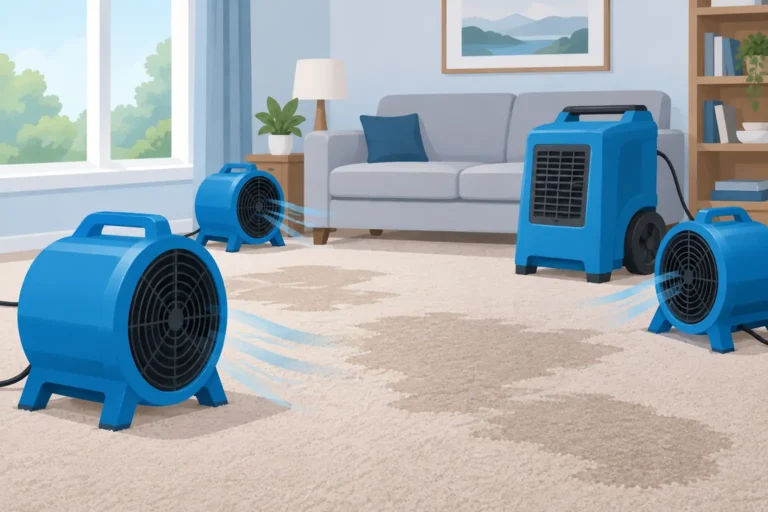
A flooded carpet can go from damp to damaged far quicker than most people expect. Water travels underneath the carpet, soaks into the underlay and can sit against skirting boards or subfloors even when the surface feels almost dry. Knowing how to dry carpet after flooding means acting promptly, but also knowing when the water or the damage makes a professional assessment the safer option.
First, make the area safe
Before moving furniture or setting up fans, stop the source of water if you can do so safely. A burst pipe, overflowing appliance or leaking roof needs attention first, otherwise the carpet will simply become wet again.
Keep clear of electrical hazards. Do not walk through standing water near power points, extension leads or appliances, and do not use household electrical equipment until you are confident the area is safe. If water has reached electrics, arrange for an electrician to check them.
The type of water matters too. Water from a clean, recent supply leak may be recoverable if dealt with quickly. Water from a toilet overflow, drain, stormwater runoff, seawater or unknown source should be treated as contaminated. In those cases, avoid handling saturated materials where possible and arrange professional flood recovery. Drying alone does not make contaminated carpet hygienic.
How to dry carpet after flooding: act in the first 24 hours
The goal is not simply to dry the top of the pile. You need to remove as much water as possible from the carpet, underlay and the floor beneath it. The longer those materials stay wet, the greater the chance of mould growth, lingering odours, staining, damaged backing and swollen timber around the room.
Start by moving light furniture and belongings out of the wet area. Place foil, plastic blocks or suitable protection beneath furniture legs that cannot be moved straight away, so dyes, rust and timber stains do not transfer into the carpet. Lift curtains clear of the floor and remove washable mats, cushions and loose items.
If the water is clean and shallow, use towels to blot small patches and a wet-and-dry vacuum to extract water from larger areas. Work slowly in overlapping passes. A wet vacuum is useful for surface water, but it usually cannot remove enough moisture from a fully saturated carpet and underlay on its own.
Open doors and windows only if the outdoor air is drier than the air indoors. On a humid or rainy day, open windows can bring more moisture into the home. Use fans to move air across the carpet rather than aiming one fan at a single spot. A dehumidifier is often more effective than open windows because it pulls moisture from the room air as the carpet releases it.
Do not turn up the heating and hope for the best. Gentle warmth can assist drying, but excessive heat can set stains, affect carpet backing or create a warm, damp environment that encourages mould. Steady airflow, moisture removal and proper extraction are the better approach.
Check the underlay, not just the surface
Underlay acts like a sponge. A carpet may look dry after a day of fans while the underlay remains saturated beneath it. If the carpet was soaked through, carefully lift a corner near a wall or doorway to check underneath. Take care around tack strips, which are sharp, and avoid pulling hard enough to damage the carpet.
In many significant flooding events, underlay needs to be removed and replaced. This is especially likely where water has been sitting for several hours, has affected a large area, or is not known to be clean. It can feel wasteful to remove underlay, but leaving wet material beneath the carpet is one of the main reasons smells and mould return later.
Carpet that has been wet for longer than 24 to 48 hours also deserves a closer inspection. Recovery may still be possible, particularly with clean water and fast extraction, but the decision depends on the carpet type, contamination risk, the subfloor and the extent of saturation.
Dry the room as well as the carpet
A dry carpet in a damp room will struggle to stay dry. Wipe down skirting boards, inspect walls for moisture marks and remove wet cardboard, rugs and fabric items that are holding water in the space. If wardrobes or built-in cabinetry have been affected, leave doors open to encourage airflow.
For timber subfloors, drying needs to be controlled. Excessive heat can cause timber to warp or split, while trapped moisture can lead to ongoing movement and odour. Concrete can also hold moisture for longer than expected, particularly after a larger water event. This is why moisture checks are useful before a carpet is re-laid or furniture is returned.
Keep fans and dehumidifiers running until the carpet, underlay or subfloor are properly dry – not merely dry to the touch. A damp smell, cool patches and condensation in the room are all warning signs that more drying is needed.
What not to do after a carpet flood
Some well-meant shortcuts create a bigger clean-up job. Avoid shampooing a flooded carpet before water has been extracted, as this adds more moisture and can push soil further into the pile. Do not scatter powders or heavily scented products over damp carpet to hide an odour. They do not solve the cause and can make professional cleaning more difficult.
It is also best not to refit furniture or lay rugs over an area until it is completely dry. Heavy furniture blocks airflow and can leave dark marks, while a rug can trap moisture exactly where you least want it.
Bleach is not a general carpet-cleaning solution. It can discolour fibres, damage backing and create unpleasant fumes. If contamination is suspected, the answer is suitable cleaning, sanitation and drying methods – not a quick household chemical fix.
When professional flood recovery is the sensible choice
A small spill from a clean source is one thing. A carpet soaked by a burst flexi hose, washing machine leak, stormwater entry or overflowing bathroom is another. Professional equipment can extract far more water than towels or a domestic wet vacuum, and moisture assessment helps confirm whether drying has reached the layers beneath the carpet.
Call for help promptly if water has spread under walls, reached multiple rooms, soaked underlay, affected timber or laminate edges, or has been present overnight. You should also arrange help where there is a musty smell, visible mould, discolouration, bubbling carpet, or anyone in the household has asthma or sensitivities.
For tenants, let the property manager or landlord know as soon as possible and keep a clear record of what happened. Take photographs before moving items where practical, note the source of the water and follow any emergency maintenance instructions. Early communication can help prevent a minor incident becoming an issue at inspection time.
Homeowners and property managers across Perth’s northern coastal communities can also benefit from a local team that understands the need for practical, timely action. Fresh Carpet, Tile & Grout Cleaning Services provides basic flood recovery with owner-delivered care, helping assess affected carpets and take sensible next steps without unnecessary fuss.
After drying, watch for delayed signs of damage
Even a well-dried carpet should be checked over the following days. Watch for returning odours, dark patches, rippling, loose edges, mould spots near skirting boards or a room that still feels unusually humid. These signs may point to moisture below the surface rather than a problem with the carpet pile itself.
If the carpet was professionally dried, ask when it is safe to return furniture and whether further cleaning is recommended once the area is dry. Cleaning after drying can remove soil brought up by the water and freshen the carpet, but it should be matched to the condition of the fibres and the source of the flood.
A flooded carpet is stressful, particularly when it happens late at night or before a property handover. Start with safety, remove water quickly and do not be reassured by a dry-looking surface alone. A careful response in the first day gives your carpet the best chance of recovery and your home the best chance of staying fresh.



You must belogged in to post a comment.